

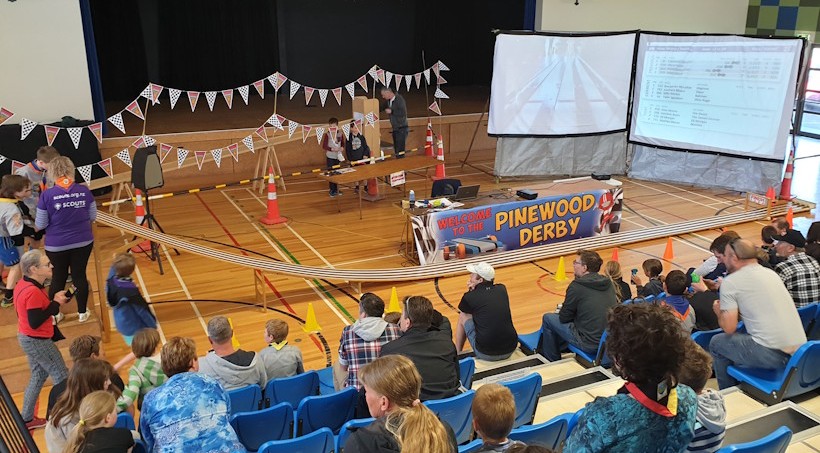
A successful Pinewood Derby requires lots of planning and many volunteers to help with the event. Based on our experience in Greater Christchurch Zone from running Pinewood Derby events for many years, this guide outlines the things you need to consider when planning a derby and outlines our approach for running a derby event.
Initial Planning
Most Groups and Zones hold their Pinewood Derby in Term 3. Winter is a good time to be in the workshop woodworking, and this fits in with the National Pinewood Derby that is usually held late term 3 or early term 4.
We recommend you start planning for your derby at least 3 months in advance. If you are making a track, or organising your own car kits, it will take time to get these together.
Establish derby committee: Get a team together to help planning and organising the event.
Select date and location: Book a venue (Scout hall, school gym, community centre) that can accommodate your track, participants and spectators.
Set the Rules: The Torlesse Car Kits include a well-established set of rules for building cars, which are based on the standard Scouting America Pinewood Derby car dimensions. This makes the kits compatible with most pinewood accessories available on the market. The rules are carefully worded to avoid the most common issues we have come across over the years, and include some handy tips for car builders. The same rules are typically used for National Pinewood Derby since the majority of participants use the Torlesse kits.
Order Car Kits: Order your car kits in plenty of time. If you are sourcing your own materials, allow time to order wheels, get timber machined and cut etc. The Torlesse Car Kits are prepared in May/June and are usually ready for shipping from mid-June so they can be distributed before the end of term 2.
Preparing for the Derby
Track & Timer
If you are organising a derby for the first time, you will need to obtain a pinewood derby track. Your options are Buy, Build or Borrow.
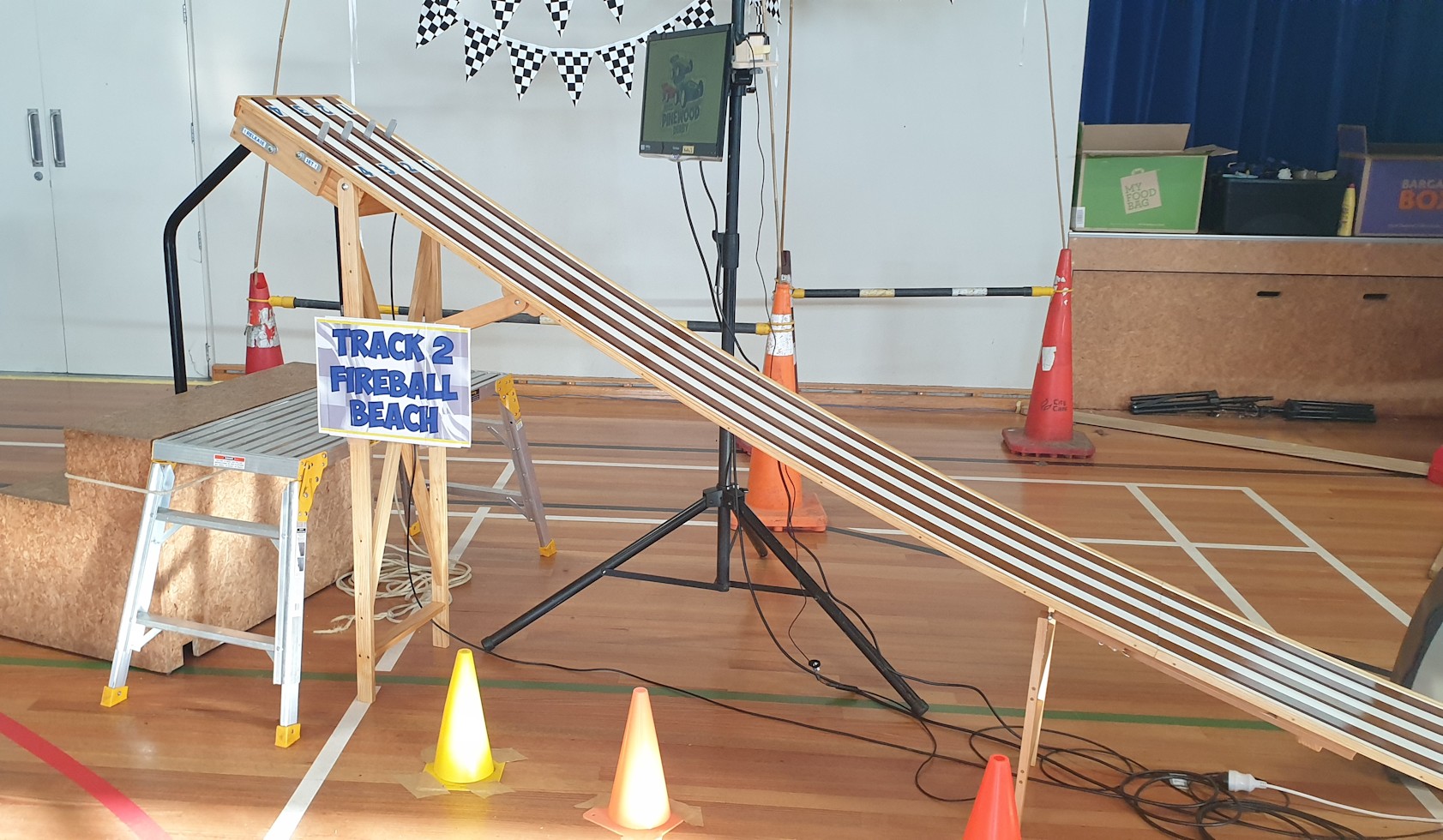
- Buy: Pinewood Derby tracks are not available within New Zealand, so buying a track from overseas and having it shipped here will be an expensive purchase. This might be funded by a sponsorship from a local business, fundraising, or a grant. Good commercial pinewood tracks are typically made from aluminium, run very smooth and fast, and have options for electronic timers. If looked after, they should last for a very long time so could be a good investment. Top rated brands include Best Track, SuperTrack and Derby Magic.
- Build: Most groups use a track made by a handy parent or leader. These are typically made from plywood, or plain or laminated MDF. The top of the track typically has a mechanism to release the cars simultaneously (a simple bar, or linked pins that drop in the track). Each lane has a raised centre “rail” that the car straddles to keep it running straight. See this post for ideas for track plans.
- Borrow: Many Scout Groups have pinewood tracks that they lend or hire (to cover wear and tear). Even if a bit of travel is involved to collect and return a track, this will be less time than making a track.
Race Software
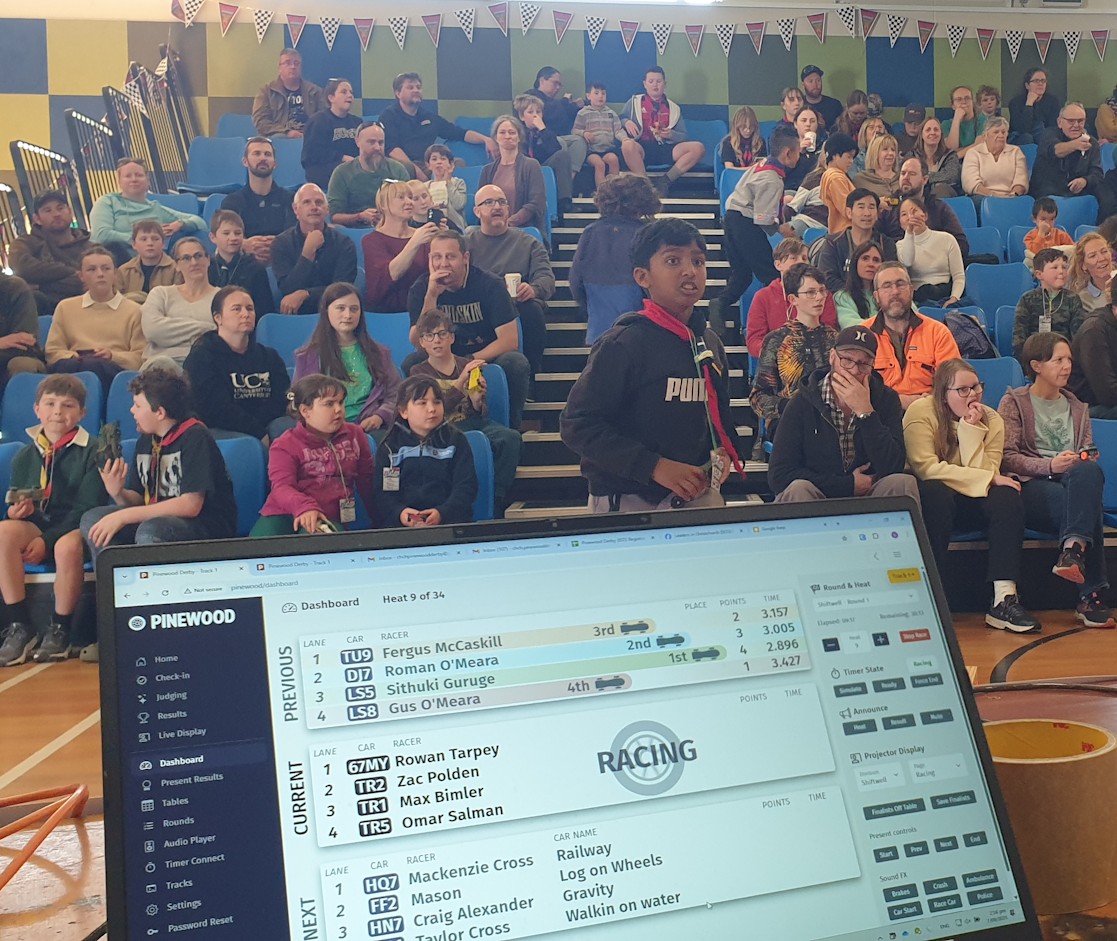
You will need a system to keep track of the cars, schedule races and recording the results on race day.
Race Schedules
Consider how you will group cars into heats i.e. who races who in each heat and in what lane. This can lead to delays on the day if you are not prepared. You may not know the exact number of cars racing until right before the racing starts so your system needs to be able to adapt quickly.
It you are keeping things low key, and are not too concerned about final placings, you can let the youth pick who they race against, or just put them in a line and cycle through the line.
For more structured racing you can use round robin, elimination, or double elimination brackets and you can find websites that will generate these brackets for you for a given numbers of participants. The disadvantage of this approach is that some participants are eliminated early and have less races than others.
The method GCZ has always used is the “Partial Perfect N” (PPN) scheduling algorithm which was developed by Scout leaders in the USA over 25 years ago. PPN is very fair, allows for a known number of heats for everyone, and keeps everyone involved in the racing right to the end. PPN scheduling ensures:
- Each car races in each lane the same number of times
- Each car races a variety of opponents (as many as possible)
- Each cars heats are spread throughout the race (to keep them engaged)
This online tool can be used to generate a PPN race schedule for any number of cars.
Timing Races
If participants are new to Pinewood Derby, there will be a reasonable variance in car speeds and it can be manageable to have finish line judges manually record finish placings. Are your racers get better at making cars, heats will be much closer, and a timer becomes necessary to just the results. Its not uncommon for cars to finish only 100th’s of a second apart.
Derby Software
Scheduling and judging races can be made easier with purpose made Pinewood Derby race software. Software options include:
- GrandPrix Race Manager: This commercial software is about US$80 and has been around for many years. It has many add-on options, works with most derby timers, and supports several race scheduling methods including PPN schedules. The software works on Windows and Mac.
- DerbyNet: Is relatively new software, but seems to be quickly becoming the modern standard. It is free, open-source, and browser-based, allowing spectators to view live results on their phones. It supports distributed, multi-platform setups and can be hosted on a Raspberry Pi computer. DerbyNet also uses PPN scheduling.
For the Christchurch derby we use a custom built timer and custom software (sorry, not readily shareable) that has evolved over several years to fit the way we run out derby. It works in a similar way to DerbyNet and I would recommend DerbyNet for groups looking for derby software.
Car Building Approach
Consider the approach you adopt for youth making pinewood cars.
- Separate to section nights: If your term programme is full of other activities, or you don’t have the woodworking expertise available to do it as a group, youth can take car kits home to make with an adult partner in their own time. This approach has the unique advantage of engaging families in a Scouting event away from section nights and can lead to a livelier derby as the time parents have put into helping with car making gives them a vested interest in the racing outcomes.
- Part of section nights: Alternatively, you can organise helpers with woodworking skills and tools to come along to Kea/Cub/Scout nights and have everyone make pinewood cars together as a group.
The former approach tends to give more scope for individual creativity and maximises parent-child teamwork, whereas the later approach can enable youth to participate that may not otherwise have access to the skills or tools required to do so.
For our derby we invite and encourage leaders, parents, grand parents, siblings etc to also make pinewood cars to race. We have had more than one parent volunteer as a leader following involvement in Pinewood Derby as a parent. We used to have all non-Scouts race in separate Open class races. Now that we have Guides of all ages participating in our derby, our racing classes are split purely on age.
Car Building Workshop
If participants are making cars away from Scout nights, consider organising a car building workshop for those that need some help. This could be an evening, week-end event or even a camp. Have parents bring along tools such as scroll saws, band saws, sanders, rotary tools etc. Youth can draw out their design on their pine block and get help to cut it out and shape it. Experienced builders can show them how to lubricate and align the wheels.
Practise Session
We run a Practise evening one week before our derby. The pinewood derby track is setup at a scout hall and we invite derby participants to drop in for 30 minutes or so to test their car on the track. We don’t do any racing, but our timing system in setup in test mode so racers can see their times.
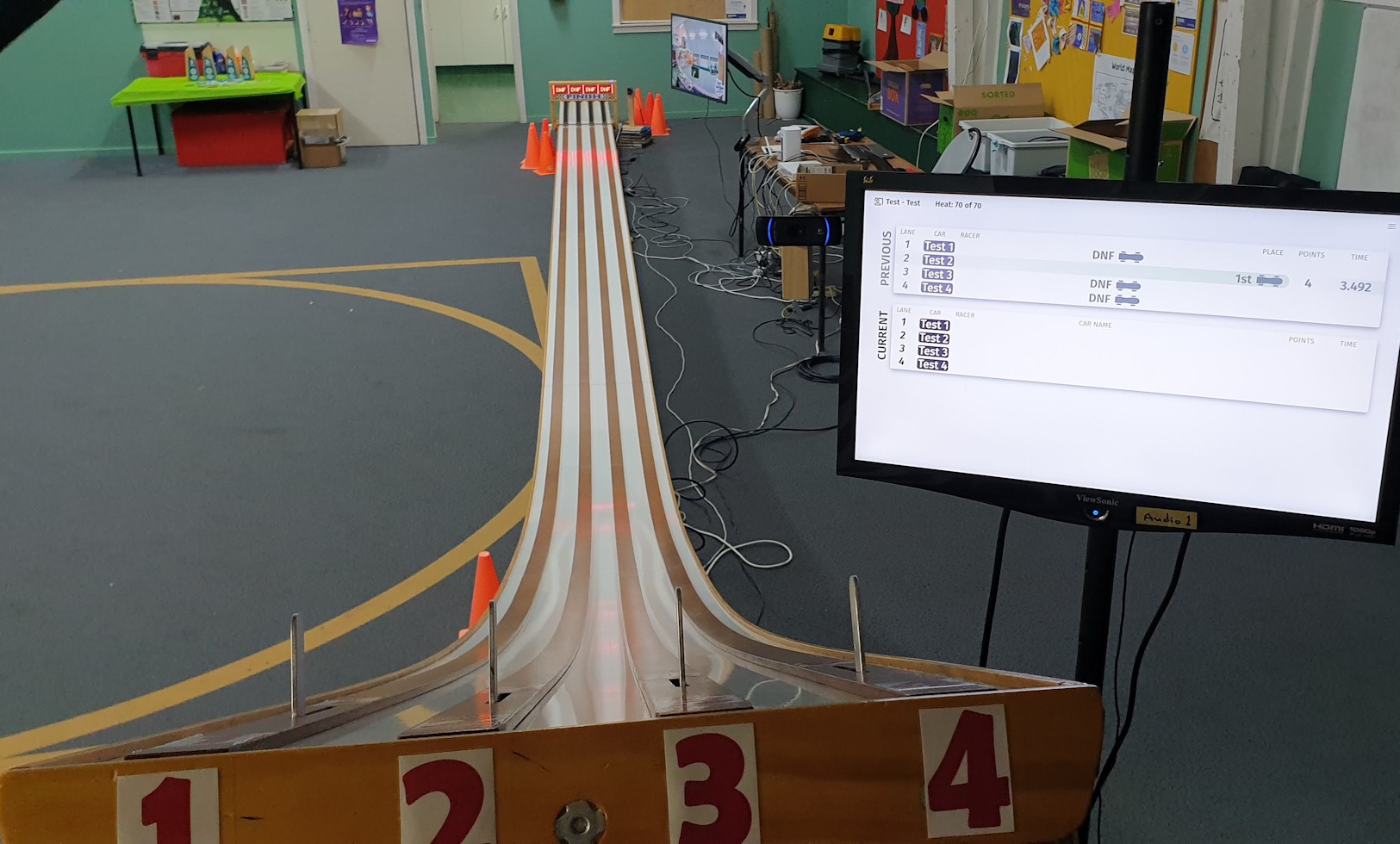
The practise night serves several purposes:
- It serves as a thorough test of the track, timer and derby software, allowing any issues to be identified in plenty of time to fix them before the derby.
- First time derby participants are sometimes unsure what to expect at the derby or are worried their car might not work on the track. They welcome the opportunity to check their cars runs OK and have any questions answered.
- Experienced derby participants who want to optimise their times can use the event to test different setups and tune their car.
Race Day
The Greater Christchurch Zone derby has participants from 28 Scout Groups, plus many youth from Guides. With around 500 racing we split our derby into multiple “Divisions” (time slots) over the course of a week-end so that each Division has up to about 30 participants. We have found that over this number, the racing goes on a bit long for some attention spans.
For each Division, youth are at the derby for about 2 hours. The time table for each Division is:
30 mins: Check-in and Scrutineering
15 mins: Car Judging
45 mins: Racing
15 mins: Award Presentation
15 mins: Fun tracks
Check-in and Scrutineering
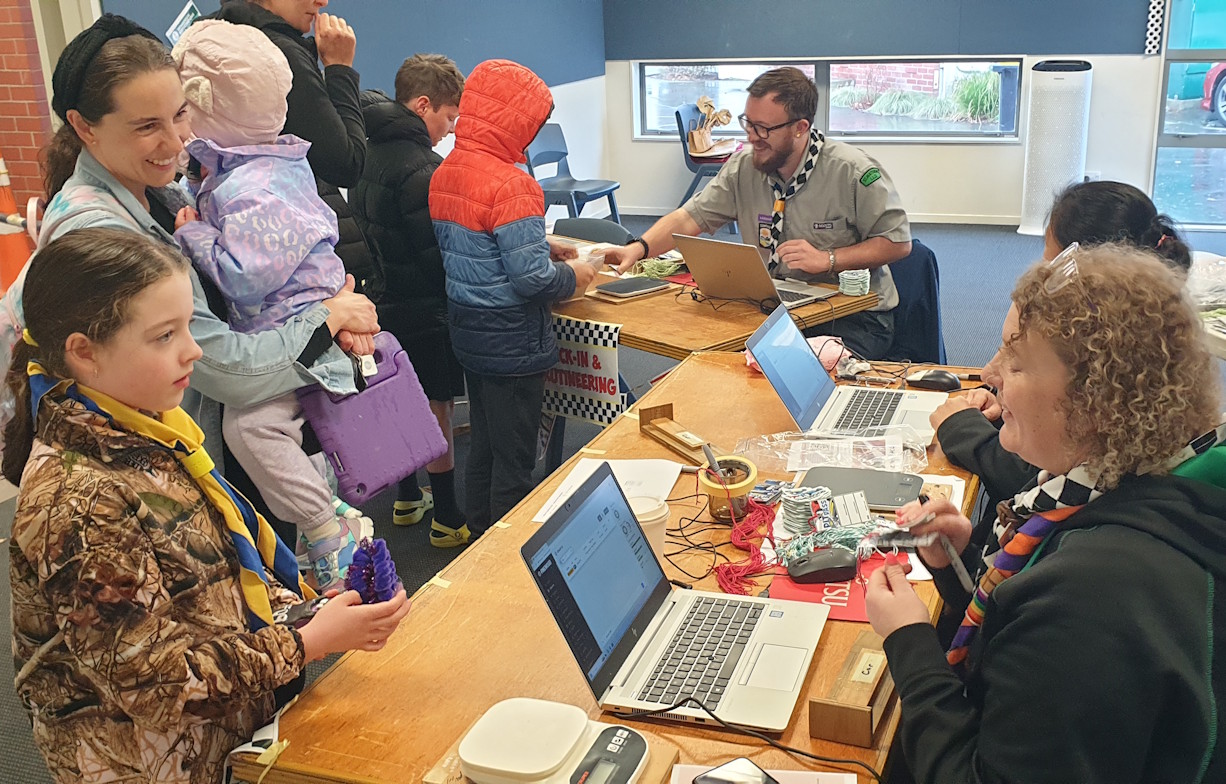
Participants register to race prior to the derby using a Google form. This allows us to have a database of participant details (Group, Car Number, Division, Class, Emergency Contact etc) prior to the event and minimise the data entry required at check-in. Our Check-in team verify the pre-registered details and then scrutineer the car. Scrutineering involves weighing and checking car dimensions and looking for anything sharp, loose or wet that might prevent the car from running, give an unfair advantage, damage the track, or interfere with other cars on the track.
Repairs Station
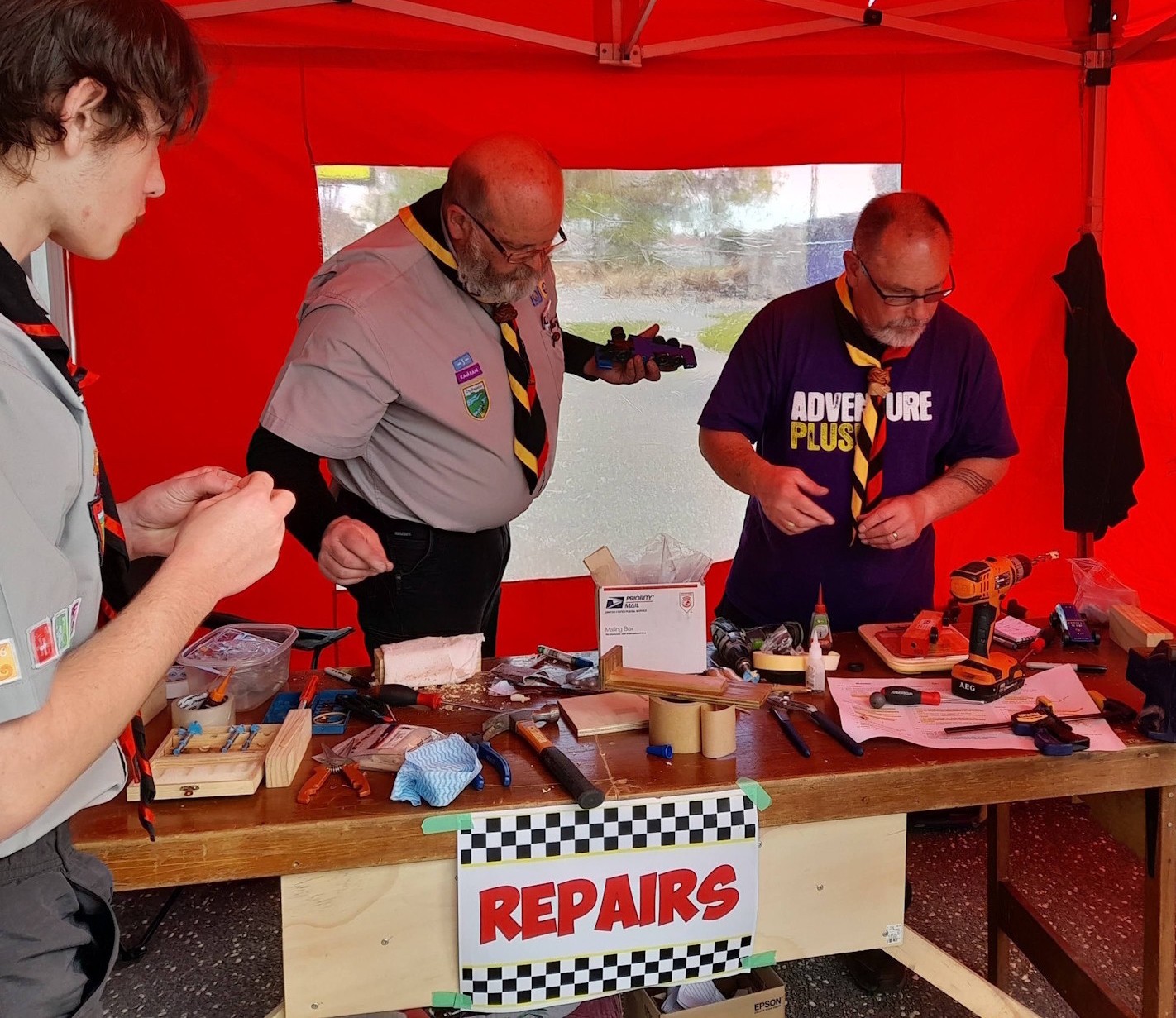
Any cars that don’t pass scrutineering are sent to the Repairs Station for remediation. We have a workbench with tools, glue, spare parts etc with experienced leaders who will do whatever modifications are required to make the car comply with the rules so it can pass scrutineering. Often this involves drilling holes or cutting pieces off the car to reduce its weight, redrilling axles holes and refitting wheels to increase ground clearance, gluing pieces on the front so it sits securely against the starting pin etc
Pit Passes
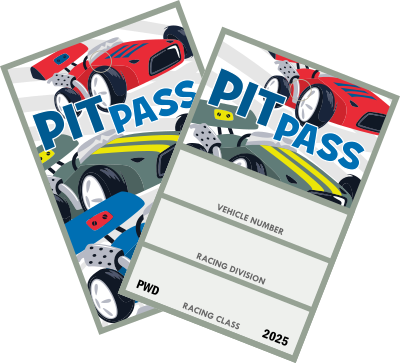
Once through scrutineering, participants are checked off in our race system as ready for racing, and are given their pinewood badge and a Pit Pass. We present the badges at the start because achieving making a car that is ready to race earns them the badge. The racing is just the icing on the cake. The Pit Pass is tag on a string (worn around the neck) that has their car number, racing division and racing class. It acts as a ticket to help leaders identify qualified racers and is a keepsake for participants.
Judging
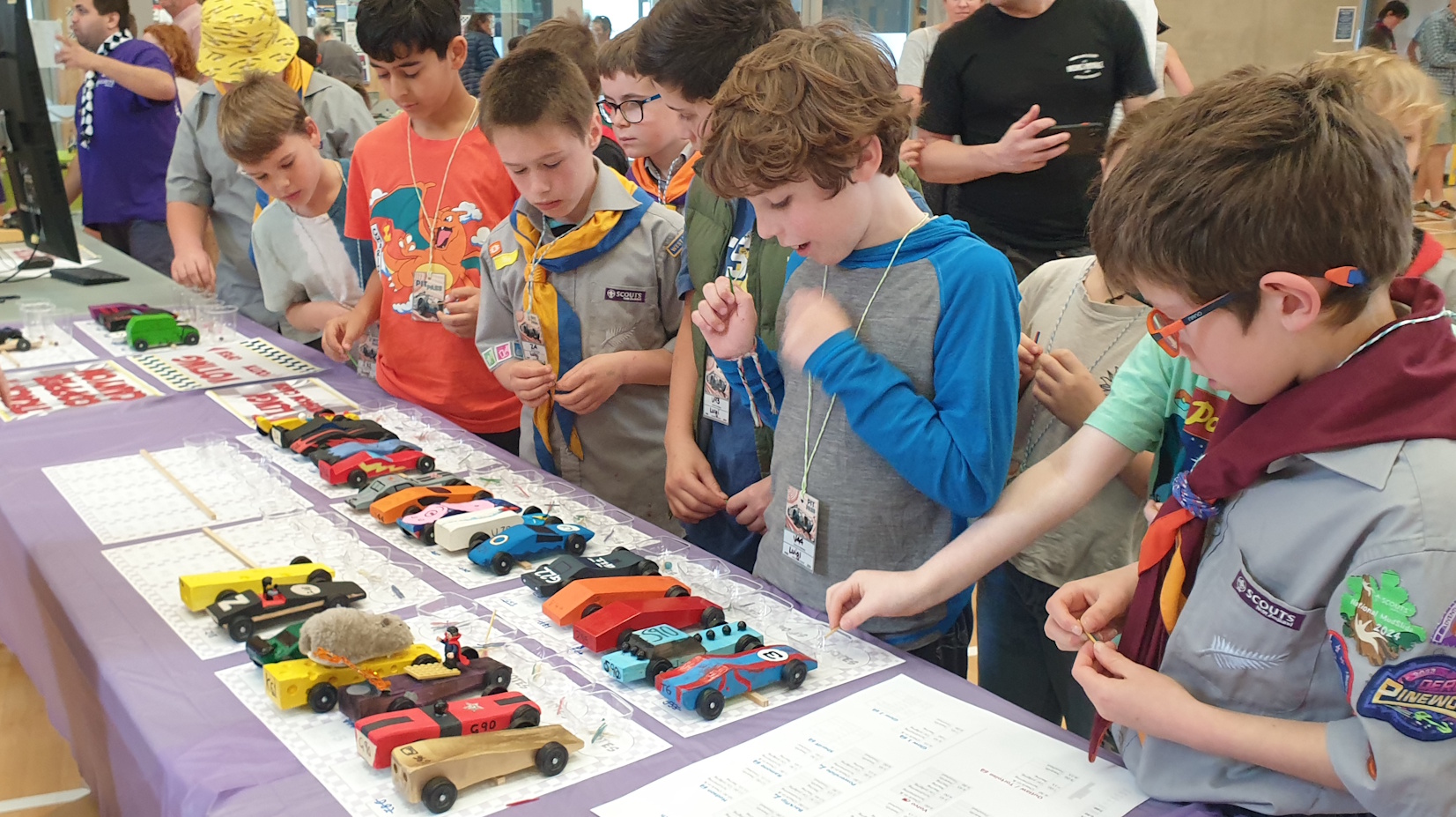
Once checked in, participants are directed to the Judging tables. We place the cars for each division together on the tables ready for judging. Keeping the cars on the table also allows us to double check we have a 1:1 match between cars present and those selected for a race in our race software, and also avoids broken wheels from dropped cars, and sneaky last minute wheel lubrication (we don’t allow lubricating wheels once at the event).
Once all cars are checked in and on the judging table, we invite participants to vote for their 3 favourite cars. We give them 3 “pinewood sticks” (coloured match sticks) and they vote by placing them in small containers in front of each car. They can vote for their own car if they like. Leaders also select winners for “best craftsmanship”, “best design”, “best paint job”, “creative use of materials” etc.
Once the judging is finished, racers collect their cars ready for racing.
Racing
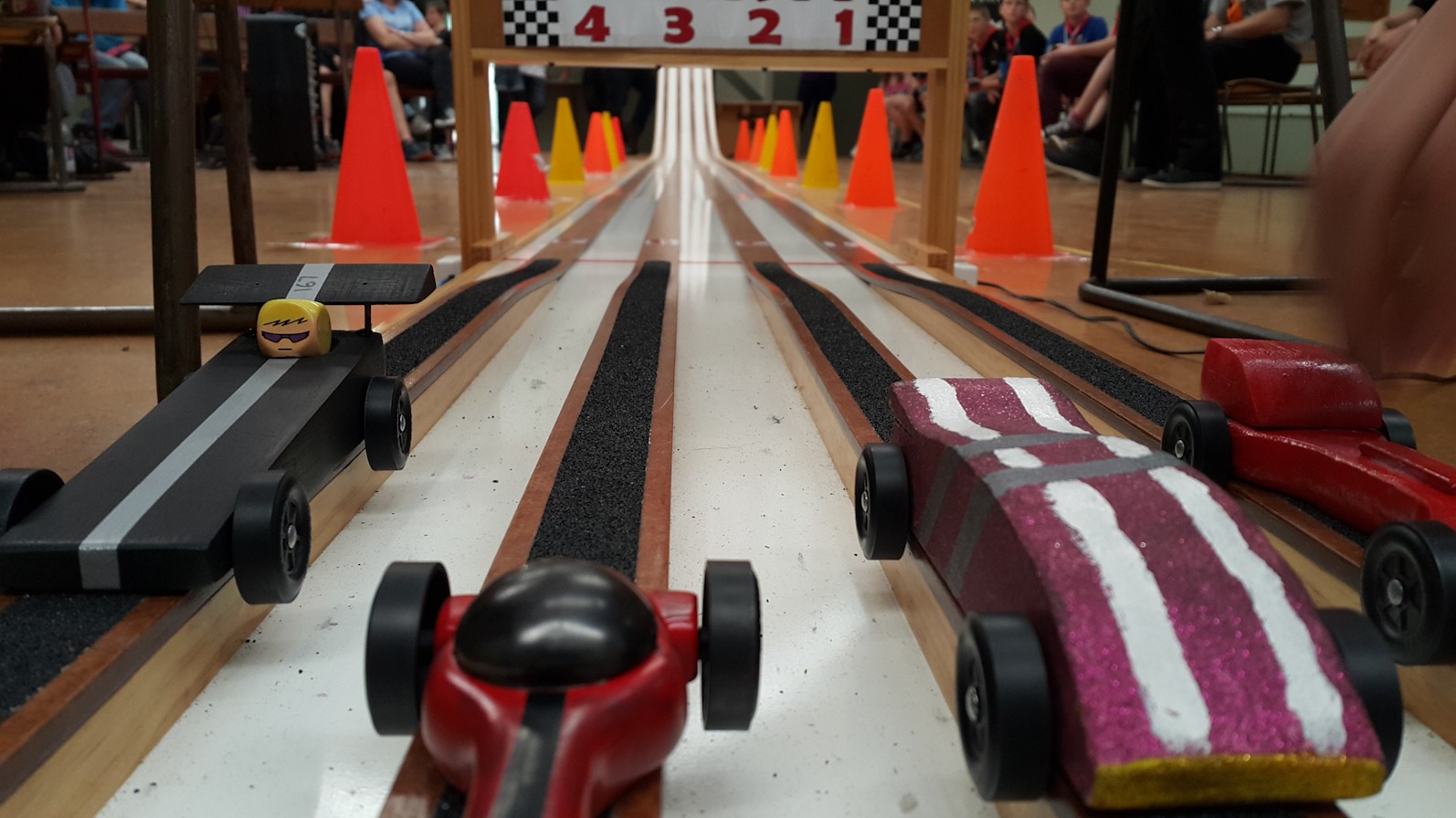
We give each participant 8 races, comprising two rounds of 1 race in each lane (4 lane track).
For each heat, the race software shows the racers names and car numbers on a large screen, and announces the heat. Racers take their car up and place in on the start of the track in the correct lane, and then go to the finish line to watch the race. The Race Starter leader double checks the correct cars are in the right lanes and starts the race. Heat placings and points are shown on a screen. Youth then collect their cars and return to their seats until their next heat.
With this system we average about 1 heat every 45 seconds, allowing for 30 participants to have 8 races each in about 45 minutes.
Awards
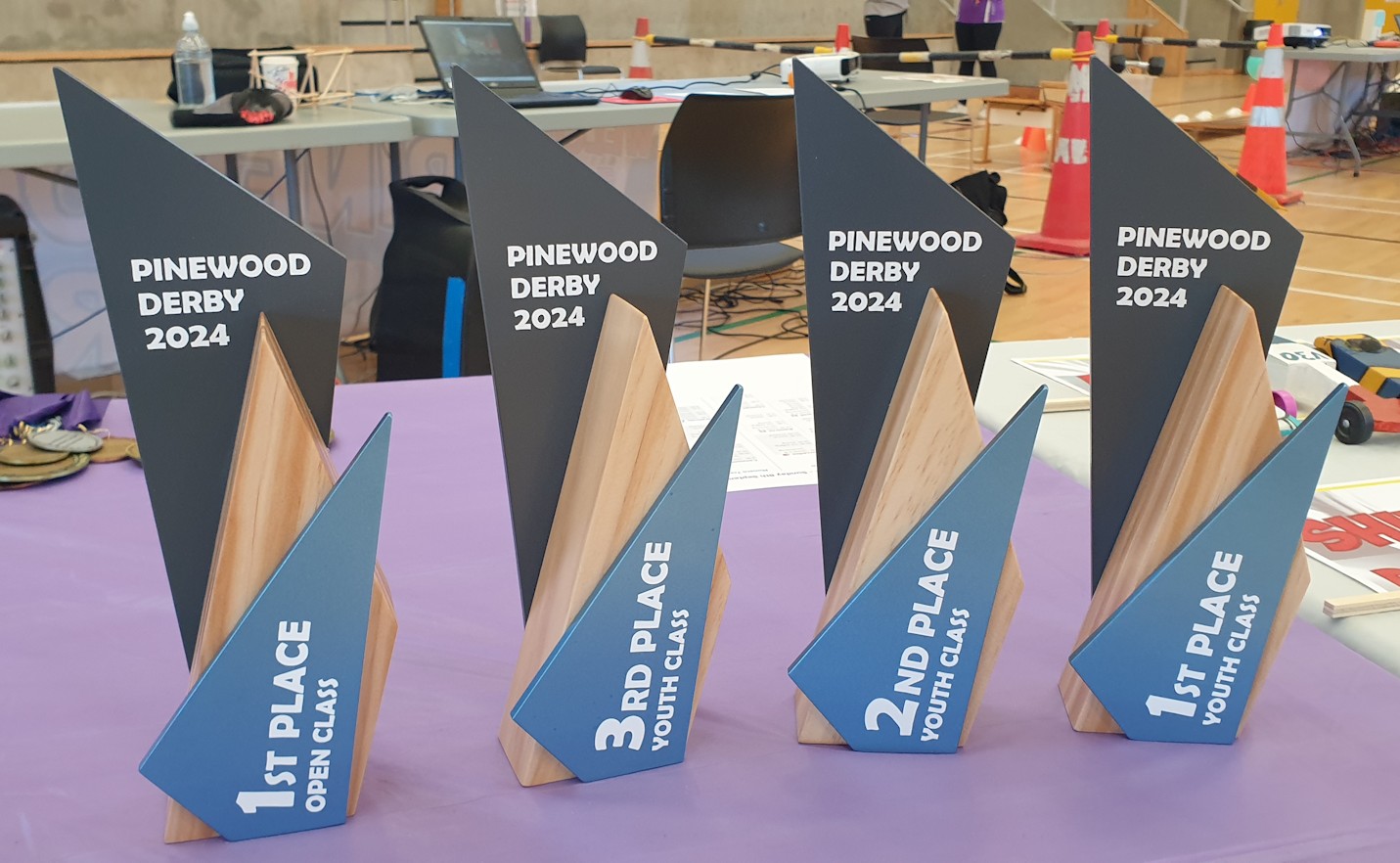
Every participant leaves with a Pinewood Derby badge and their Pit Pass. Favourite cars (as voted for by the youth, and the leaders) are presented with certificates. Fastest racers are awarded medals. Because we have multiple Divisions racing over the week-end, the fastest cars from each Division qualify for a finals race that we hold on the Sunday afternoon, and we award trophies to the overall winners.
Fun Tracks
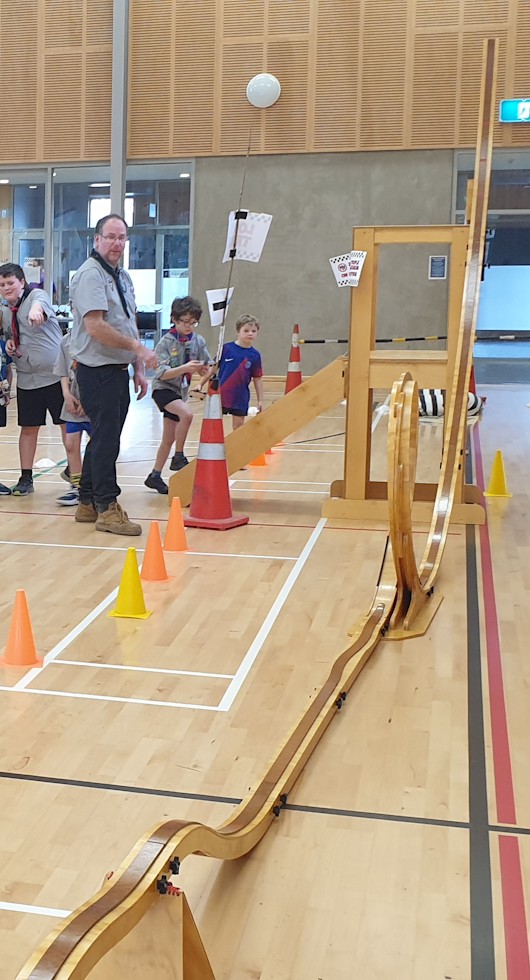
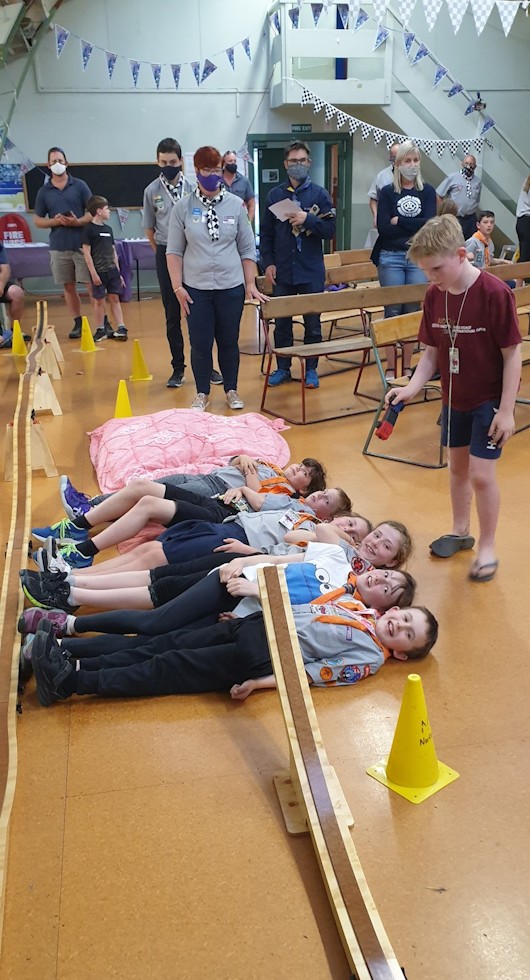
As a bonus activity after the racing, we also have a couple of single lane tracks racers can try just for fun. One has a full loop-de-loop followed by humpy and wiggly sections. The challenge is for the car to make it around the loop and stay on the track to the end without being thrown off. The second track is like a ski jump. Racers can dare their friends to lie on the ground and have their car jump over them onto a bean bag.
Refreshments
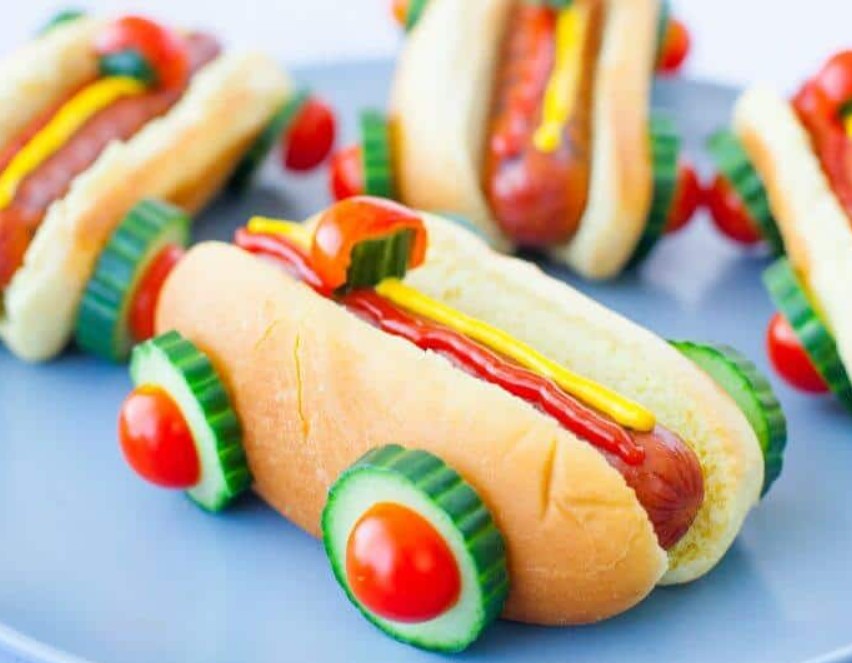
One of our Groups runs a sausage sizzle fundraiser throughout our derby. This may include drinks and sweet treats. To really get into the spirit of things, the stall could sell car racing themed food and snacks. Search online for “pinewood snacks ideas” for inspiration.
Have I missed something? Do you do something different for your derby that you would like to share? Leave a comment below and I will add it to this guide